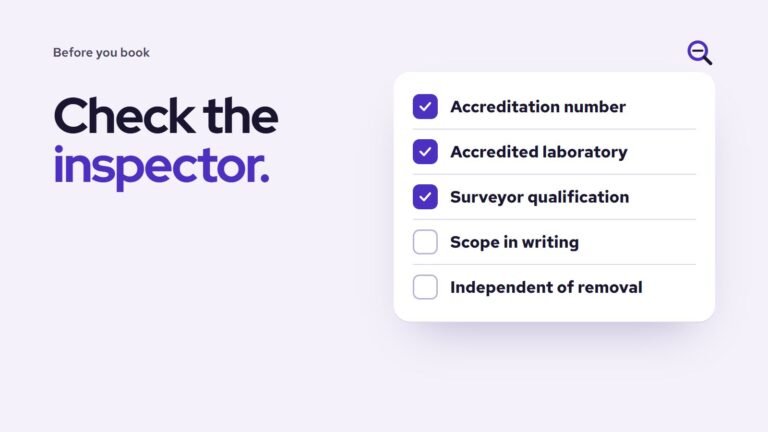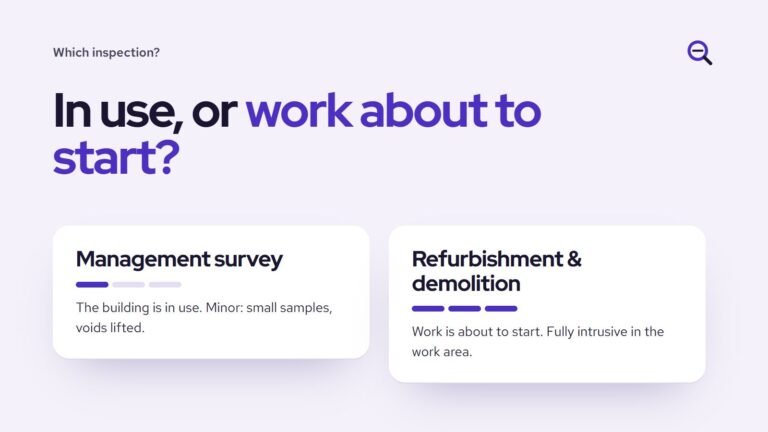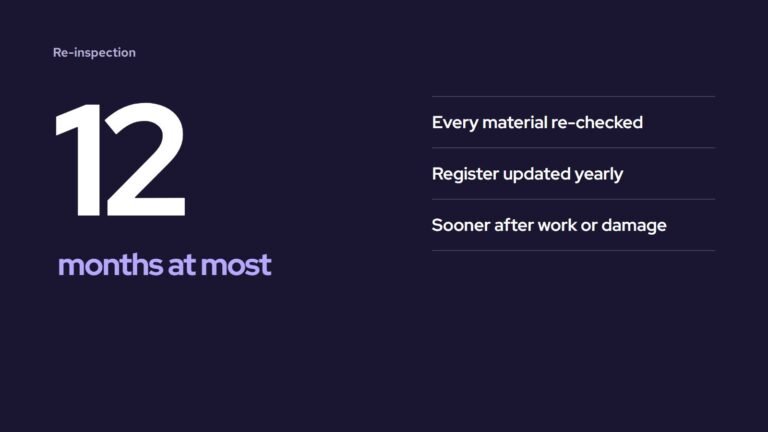
HSE’s survey guide, HSG264, sets out what a survey report should contain (paragraph 132). If one you’ve been sent is missing any of these, ask why.
- A summary you can read in two minutes. What was found, what’s urgent, what can wait.
- The scope. Survey type, areas covered, and anything agreed to be left out.
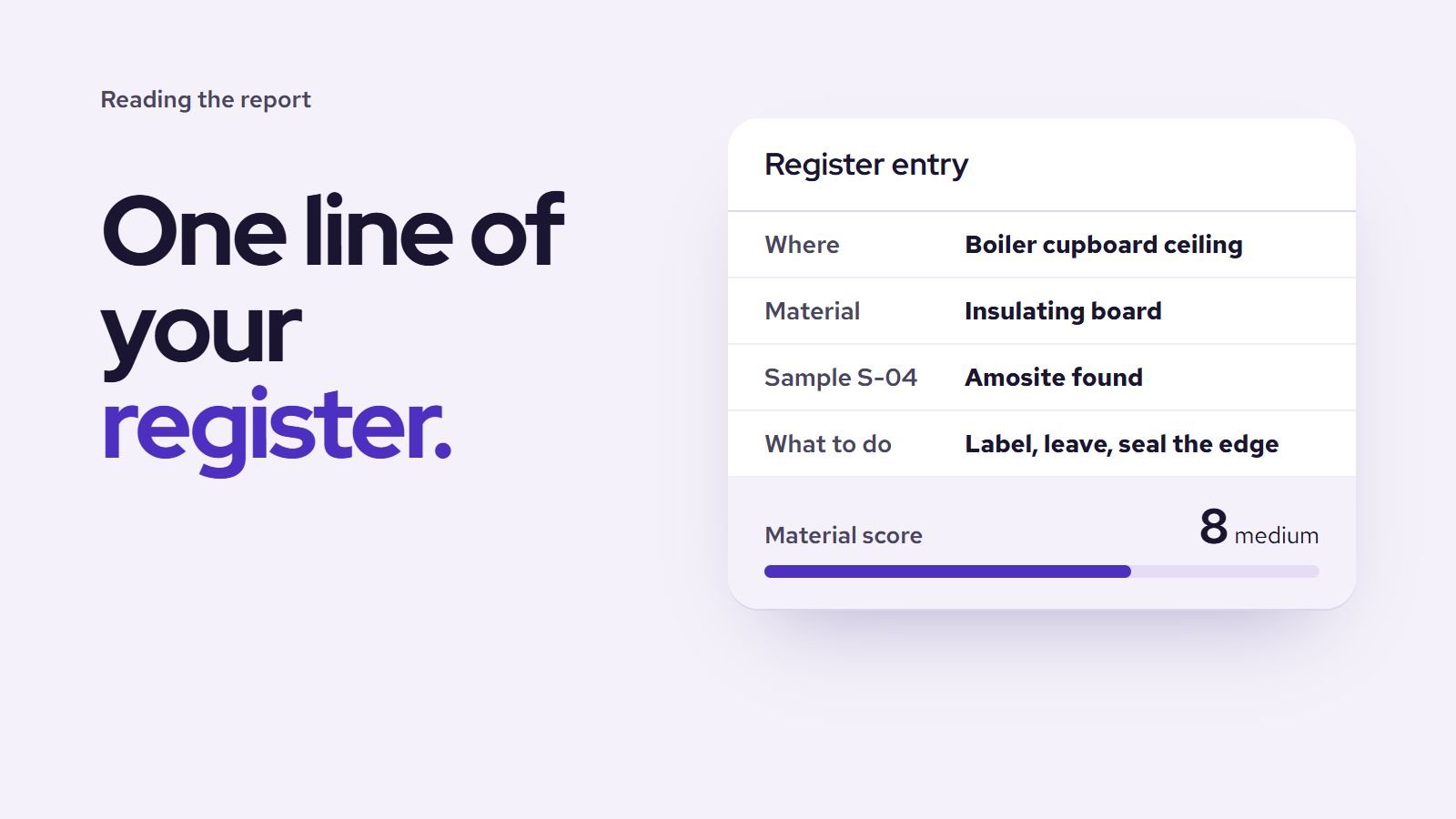
- The register. Each material’s location, type, amount, condition, score and photo.
- Lab results. The certificate for every sample, from an accredited laboratory.
- Plans or sketches. Where each sample and material is, so contractors can find it.
- Actions. Leave and manage, repair, seal or enclose, or remove, item by item.
- Areas not inspected. Every room or void they couldn’t reach, and why.
The part people skip: areas not inspected
Any area an inspector couldn’t get into has to be treated as if it contains asbestos until someone checks. A good report says so plainly: a roof hatch painted shut, boxing behind fixed kitchen units, a lift motor room with no engineer on site. Each one should come with what happens next.
How materials are scored
HSG264 scores each material from its type, damage, surface and asbestos type: 10 or more is high, 7 to 9 medium, 5 to 6 low, 4 or less very low. The score helps decide what to do first.
Not sure which inspection fits your building? Call 020 3386 1854 and you’ll get a fixed quote in writing before anyone visits.